

Aire continues its conversation with Emilie Migault. Here is the second part of her interview. Let’s discover where her creativity comes from and how she manages a project.
What are your sources of creativity?
As I mentioned earlier, trade shows fuel imagination and creativity. We get inspired by what others do. You have to keep an eye on Instagram, Pinterest, magazines, etc. The sources of inspiration are numerous; you visit someone’s home and see just a small object that makes you think of something else. It’s always about keeping your mind alert. I gather a profusion of ideas, most of which will probably never be used, but one idea always leads to another, and that’s what’s interesting. I may not yet have the right project for it, but I note it in a corner of my mind. Ideas and inspirations abound in nature, in any home, at the sight of a building. As I said before, you have to keep your eyes open to everything.
Do you have a specific creative process and way of working, or does it really depend on the project you have in front of you?
It may sound strange, but ideas often come to me at night. When I meet clients and they share their desires or needs, many ideas come to me, but they need to mature. Usually, I have a small notebook on my bedside table at night and I jot down ideas. For the first two or three nights after visiting a site, I don’t sleep much. Ideas flow regardless of the clock, so I write things down. In the morning, I have to sort through them. That’s when little things start to take shape.

That’s how it starts. Then, I have to find what I imagined. I go looking for certain types of lighting, furniture, atmospheres to create a mood board. That’s how I work with my clients. I propose to first create a preliminary project. It’s a big file where I suggest atmospheres, possibly 3D plans, and layout ideas. I list all the materials, fabrics, ideas, and prepare a project estimate. It’s very precise and detailed. I make sketches. The plans are part of the second phase of project follow-up.
I sell this file first. It is developed over the long term, after several meetings with clients. I offer them many samples and, gradually, we refine the choices to really match their needs and tastes.
Once the project is defined, I bring in contractors to estimate the work.
From there, I offer to oversee the project and I create plans for them. I select companies again based on the quotes, and then we start the work. I am very present on the sites. For a project to progress quickly, there’s no secret: you have to be vigilant. I am very meticulous about respecting the rules of the trade in renovation and about finishes. The teams I work with know this.
Do you think you have a particular style?
I don’t know *laughs*. Of course, I think I have a signature, but I really try to stick to my clients’ wishes. It can be small things; I can adapt to requests for very modern atmospheres with extremely linear and graphic layouts and bookshelves, for example. But I also design much more “loaded” projects; it really depends on the client’s desires.
I sincerely believe we are not here to create a beautiful decor; we are here to create a nest for the people who call us so they feel good there. We design what they hoped for but never imagined. We have to create their universe and not impose ours; that’s important so clients feel comfortable.
For example, I talked some years ago with a decorator friend who had been called by clients wanting to redo a very recent decoration. She didn’t understand; their interior was beautiful. Talking with the owners, she realized the clients were actually in a showroom. They didn’t feel comfortable there; they couldn’t make the place their own. To me, that’s a failed decoration! If it’s just to create magazine-style decor, it’s not very meaningful. There has to be a soul.
I do think there is a soul in my projects. At least I hope so! I have a client who has entrusted me with four projects, for example. I did her house, her husband’s offices, a mountain chalet, and a second house after she sold the first. After four projects, I really realized that my work satisfied her and that she embraced my universe. It’s very pleasant and rewarding to be called back by clients you’ve already worked with.
Do you have preferred types of projects, or do all projects suit you?
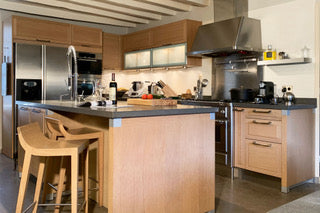
I like things that are a bit technical, so I find kitchen and bathroom projects very interesting. Creating living rooms or bedrooms is less technical but more personal. Every project has its interest. Professional projects like commercial spaces and offices interest me a bit less. But they are often technical challenges and ergonomic puzzles. I designed an entire medical office; it was fascinating because it’s extremely technical and very precise. But from a creativity standpoint, you’re a bit more limited due to technical or regulatory constraints.
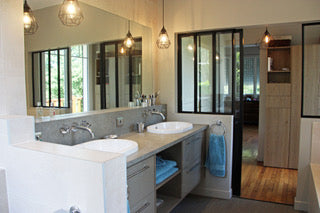
And I like the project because it’s where you learn; no two projects are alike. I’ve learned a lot from all the people I’ve worked with. You gain many skills by following the “hardworking ants.” It’s thanks to them that a project progresses, looks beautiful, and is well finished. You can have all the best ideas in the world, but if you don’t have competent people to implement them, companies who care about doing a good job, the result won’t be beautiful. It’s in the details that you feel the quality of a work.
Feel free to take a look at our latest article: Le Studio Ammo
Interview conducted by Clara Didier
Formatted by Coralie Mottu
0 comments